Containment that protects the rest of the home
Work areas are isolated with plastic barriers and controlled airflow so spores do not spread into hallways, HVAC returns, or adjacent rooms.
Serving Ann Arbor, Michigan & surrounding areas
If you smell a musty odor, see staining, or have had a recent leak, you need containment, safe removal, and a plan that fixes the moisture source so mold does not come back.
✓ Skip the 3-hour Google rabbit hole — we’ve already done the vetting
✓ One conversation, not ten voicemails and seven web forms
✓ 24/7 emergency response — talk to a real person who actually knows Ann Arbor
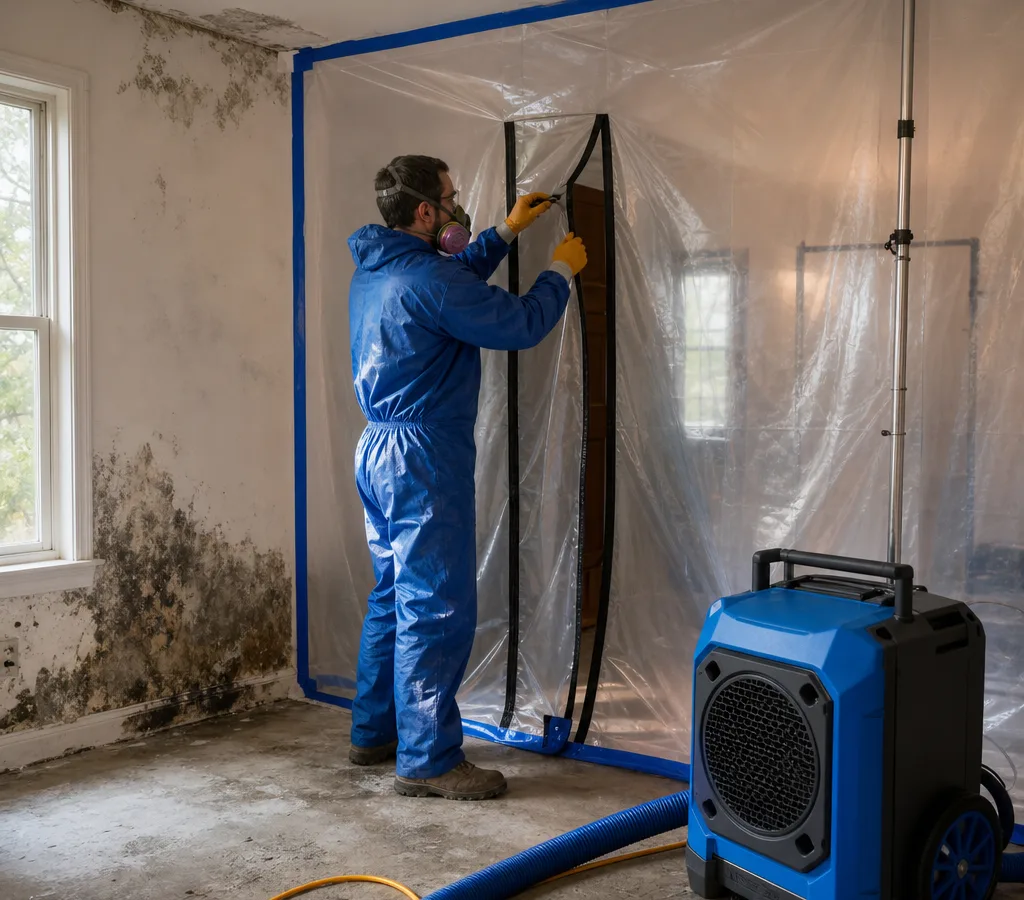
When you are searching for mold remediation Ann Arbor homeowners can trust, you are usually trying to solve two problems at once: remove contamination safely and stop the moisture that allowed it to grow.
Water Damage Ann Arbor handles residential and light commercial mold remediation in Ann Arbor, MI with a practical, inspection-first approach. We start by identifying where mold is present, what materials are affected, and what is feeding the growth—roof leaks, plumbing leaks, wet basements, humid crawlspaces, or poor ventilation. Then we contain the work area, remove affected materials as needed, clean and HEPA-vacuum remaining surfaces, and verify the area is ready for rebuild.
If your situation started with a leak or flooding, you may also need water damage restoration first so wet materials are dried correctly before remediation begins.
Work areas are isolated with plastic barriers and controlled airflow so spores do not spread into hallways, HVAC returns, or adjacent rooms.
We use HEPA air scrubbers and HEPA vacuums as part of the process, paired with moisture control steps so the conditions for growth are removed.
Porous materials like drywall, insulation, carpet, and some ceiling tiles often need to be removed when growth is established. Non-porous surfaces may be cleaned and treated when appropriate.
You get a clear outline of what areas are included, what gets removed, what gets cleaned, and what the next steps are before repairs begin.
Personal protective equipment, controlled debris handling, and careful wipe-down and HEPA vacuuming reduce cross-contamination during and after the work.
Ann Arbor has a mix of older homes and newer construction, and the building details change how remediation should be approached.
In older neighborhoods such as Burns Park, original plaster walls, older window assemblies, and limited bathroom ventilation can create chronic condensation zones. A good plan focuses on both removal and the reason the surface is staying damp.
In areas with more basements and split-level layouts, such as portions of West Side Ann Arbor, lower-level humidity and small foundation seepage can drive mold on framing, stored contents, and basement finishes. Containment and dehumidification strategy matter, because basements connect to the rest of the home through stairwells and HVAC.
Around Kerrytown and other parts of the central area with a range of housing types, we often see small, repeated moisture events: a slow supply line leak, a dishwasher drip, or window condensation that has been ignored behind furniture. These jobs can look minor until materials are opened up and the affected area is mapped.
On the north side near Plymouth Road, multi-unit buildings and tight mechanical chases can allow moisture and odors to travel. The remediation approach may need to account for shared walls, penetrations, and how air moves through the structure.
No matter the neighborhood, mold remediation works best when the scope is based on inspection findings rather than treating only what you can see.
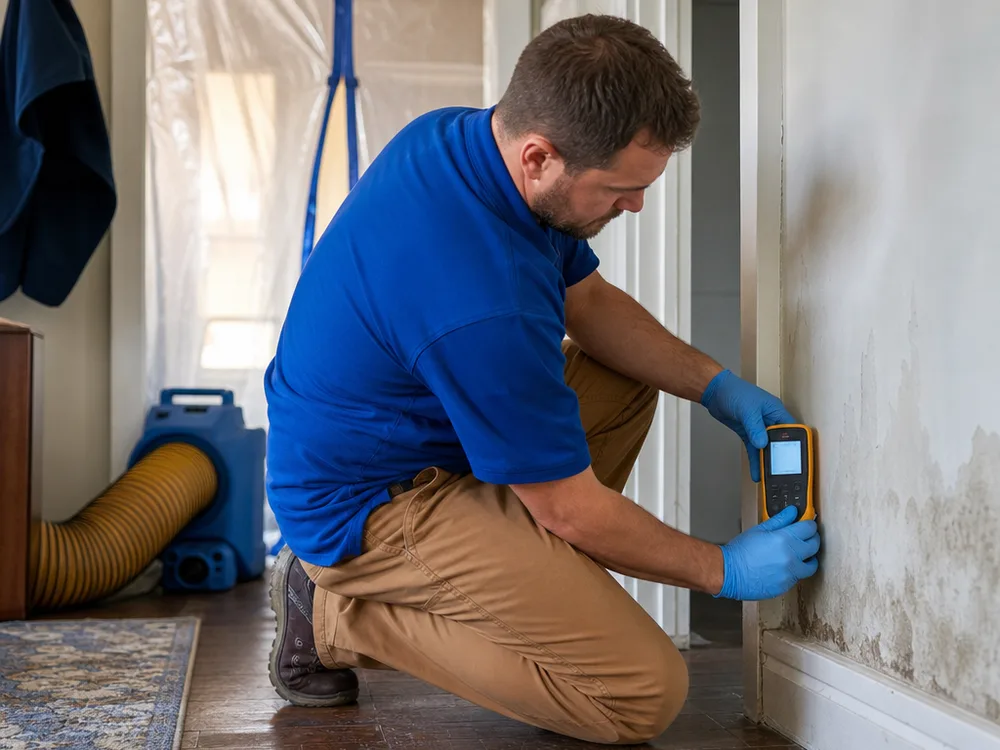
A controlled sequence isolates contamination, removes affected materials, corrects moisture, and prepares the space for repairs.
We look for visible growth, staining, and musty odor sources, and check likely moisture pathways including plumbing, roof lines, window areas, basements, and crawlspaces. Moisture readings show what is still wet and what needs drying or removal.
We set up barriers and manage airflow so the work area stays isolated. HEPA filtration is used to capture airborne particles during demolition and cleaning.
When porous materials are impacted, they are carefully removed and bagged out. We aim to remove only what is necessary while still getting to clean, sound substrate.
Remaining surfaces are cleaned and HEPA-vacuumed. Framing and sheathing may require detailed scrubbing and repeated passes, especially at corners, fasteners, and joints where dust collects.
If materials are still wet, we address drying and dehumidification. Long-term correction may include ventilation improvements or repairs to the leak or seepage source so conditions do not repeat.
We leave the area clean and ready for repairs. If third-party clearance testing is part of your plan, we coordinate timing so the space is in the right condition for sampling.
Mold remediation in Ann Arbor typically ranges from about $1,500 to $6,500 for many residential projects, with small, contained areas sometimes closer to $800 to $1,500 and large, multi-room or basement jobs reaching $10,000+.
Your final cost depends on how far the growth extends behind finishes, what materials must be removed—including drywall, insulation, and flooring—how complex containment needs to be, access to the affected area, and whether drying and dehumidification are required. The exact scope and price are confirmed after an on-site inspection.
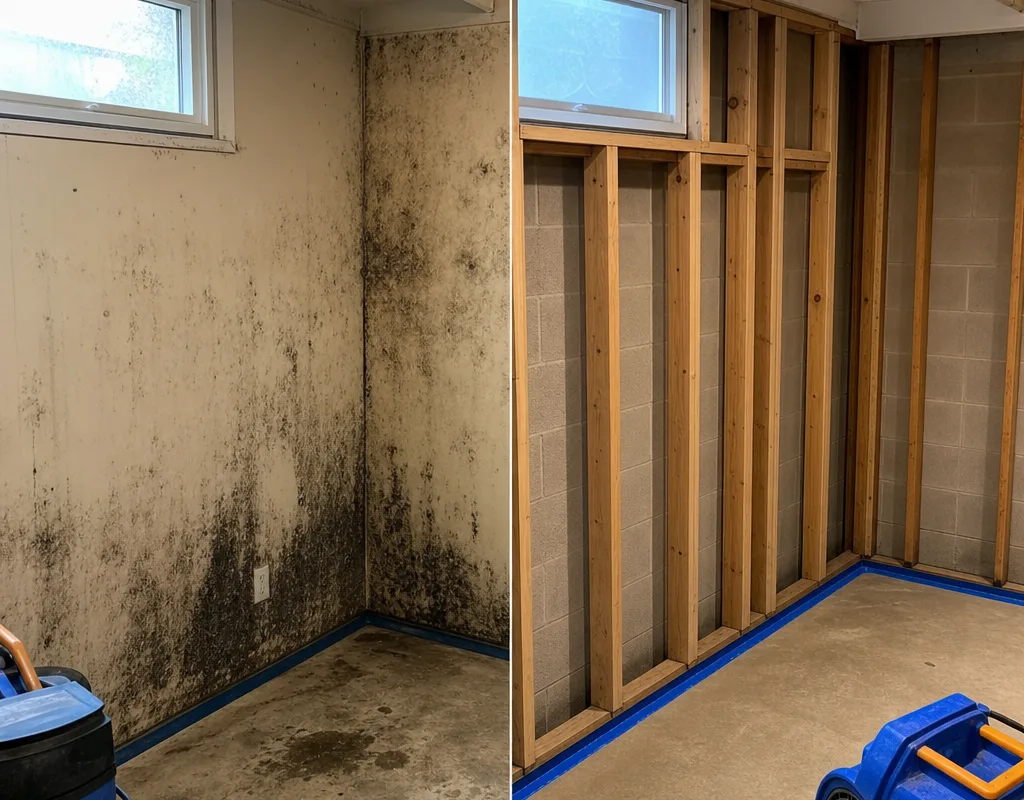
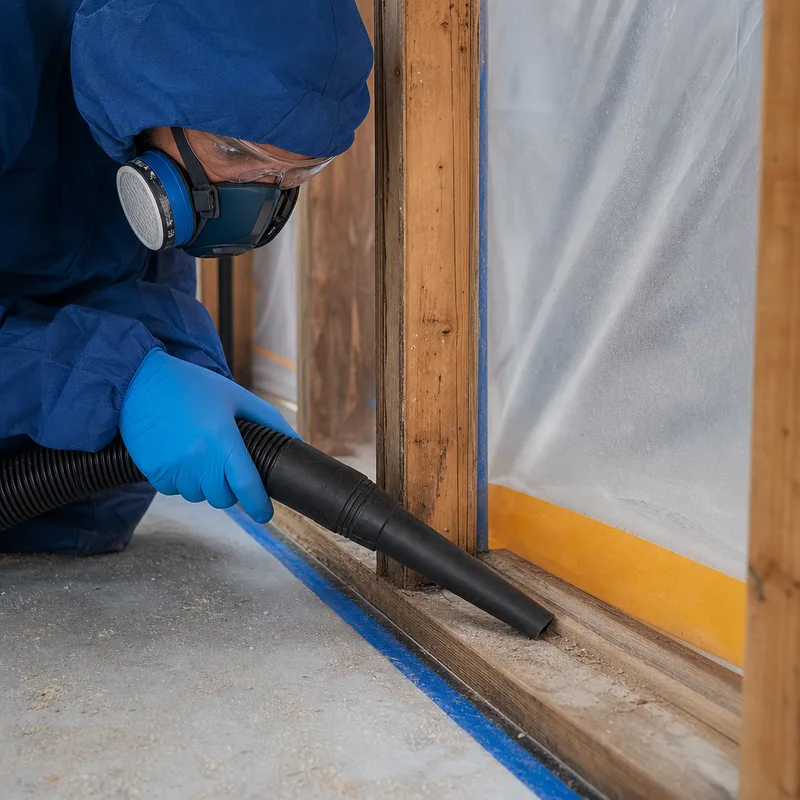
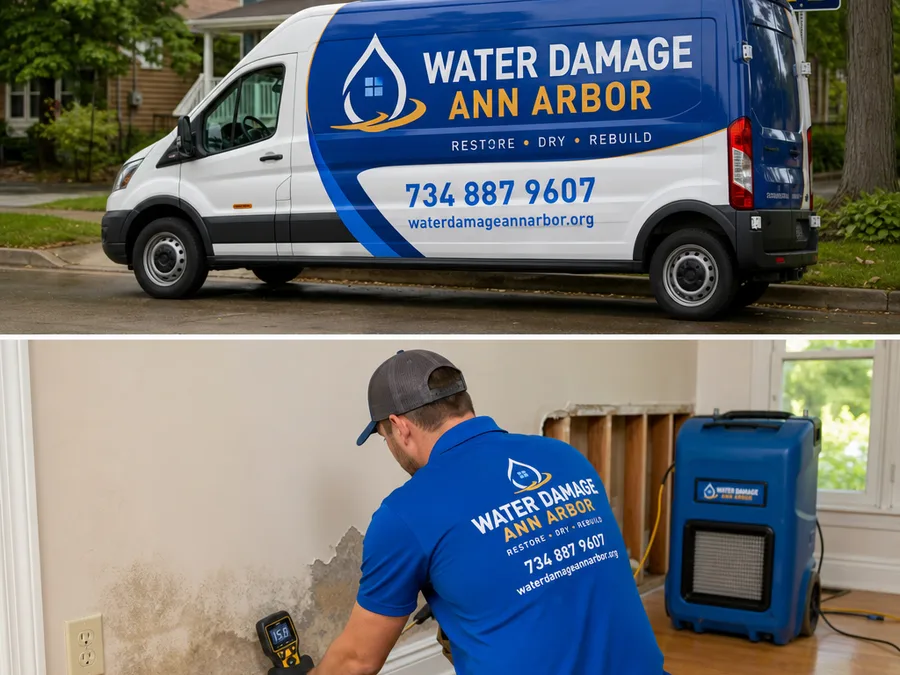
Many projects take 1 to 3 days for containment, removal, and cleaning, while larger basement or multi-room jobs can take a week or more. Timing depends on how much material must be removed, whether drying is needed, and whether the area is ready for rebuild right away.
Often you can stay home if the work area can be fully contained and you can avoid that area, but it depends on location, HVAC layout, and whether demolition affects essential rooms. We will outline access restrictions and any temporary HVAC adjustments before work starts.
Sometimes, but only when the affected surface is non-porous or the growth is truly superficial and the material can be cleaned to a sound condition. If drywall or insulation is impacted, removal is usually the correct approach because porous materials hold contamination and moisture.
Testing is optional and is usually most useful as post-remediation clearance when an independent lab result is needed for peace of mind, real estate, or documentation. Many homeowners choose to prioritize a good inspection, moisture control, and a properly contained remediation scope, then add clearance testing after the area is cleaned.
Mold returns when the moisture problem was not corrected or when contaminated dust spreads outside the work area. The prevention plan should include fixing the leak or humidity source, drying damp materials, and using containment and HEPA cleaning so spores are not left behind in adjacent spaces.
Yes, mold remediation can be scoped for single units, common areas, or specific building sections, with containment tailored to occupied spaces. We can provide a written scope and coordinate scheduling to limit disruption for tenants while still addressing the moisture source.
If you suspect mold, the fastest way to protect your indoor air is to get a professional inspection and a written plan that covers containment, removal, and the moisture fix, not just surface cleaning.
Tell us what you are seeing and where it is happening. We will schedule an inspection, explain the scope in plain language, and outline next steps to remove the mold and prevent repeat growth.